Turn public datasets into findings you can trust.
Ask a question, analyze trusted public datasets, and uncover statistically-backed findings with charts, explanations, and a complete analysis report.
How it works
Pick public datasets
Browse data.gov, FRED, World Bank, and NYC Open Data. We handle cleaning and joins.
We run the analysis
Correlations, trends, group tests, and ML patterns, each with p-values and sample sizes.
Get evidence-backed findings
Ranked findings in plain language, plus grounded chat for follow-ups.
Every analysis includes
- Plain-language summary of the strongest patterns
- Charts linked to each finding
- Chat to ask follow-up questions about your results
- Full report with tests, p-values, and data sources
Example finding
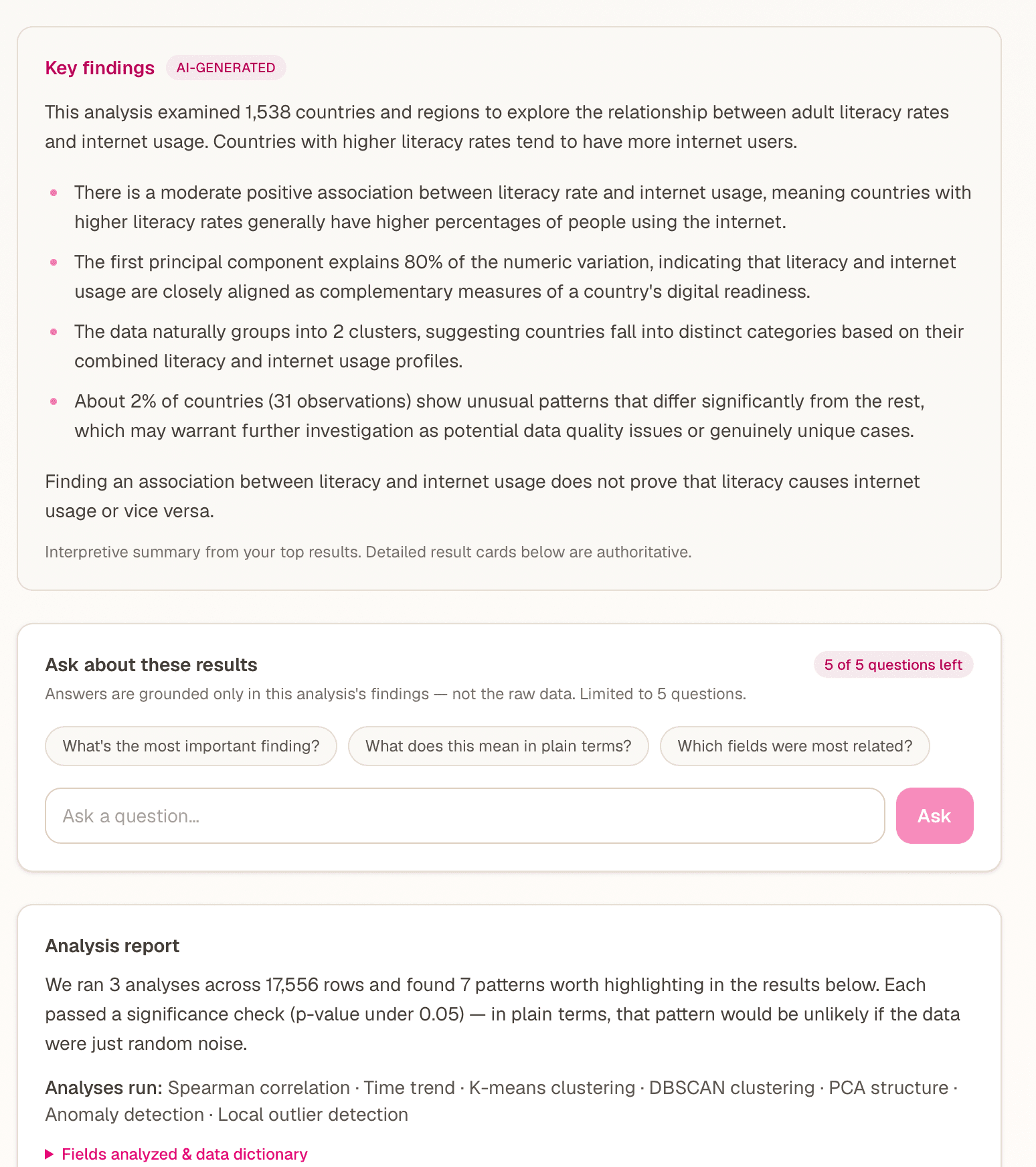
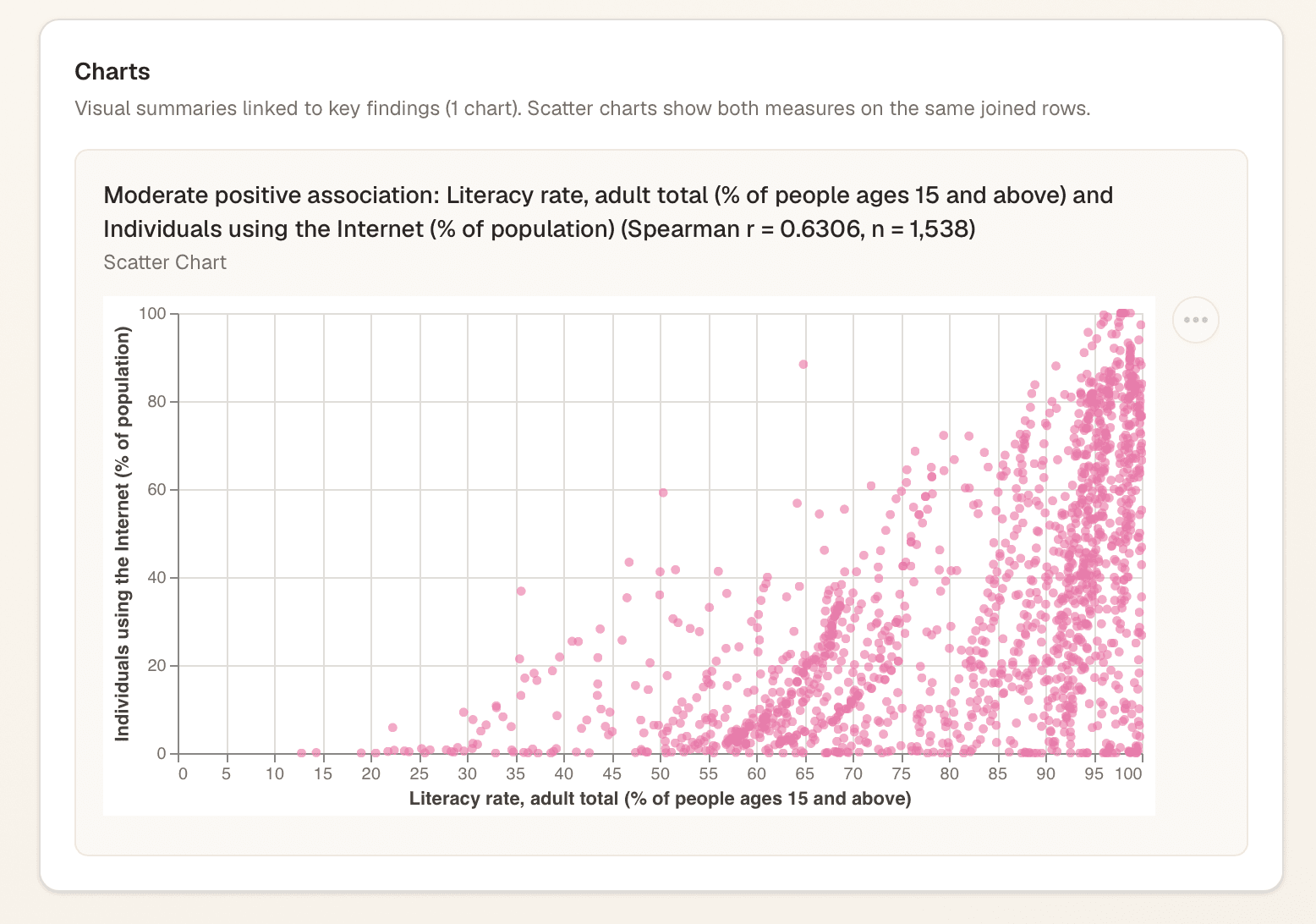
Moderate positive association between adult literacy and internet usage (Spearman r = 0.63, n = 1,538). Countries with higher literacy tend to have higher internet adoption.
Questions you can ask
Start with a question. Findings suggests datasets and runs the analysis.
Open data should be useful to more than data scientists
Governments and institutions publish vast amounts of public data, but most people never get to use it. Findings lowers the barrier with real statistics, licensed sources, and answers you can read and share.